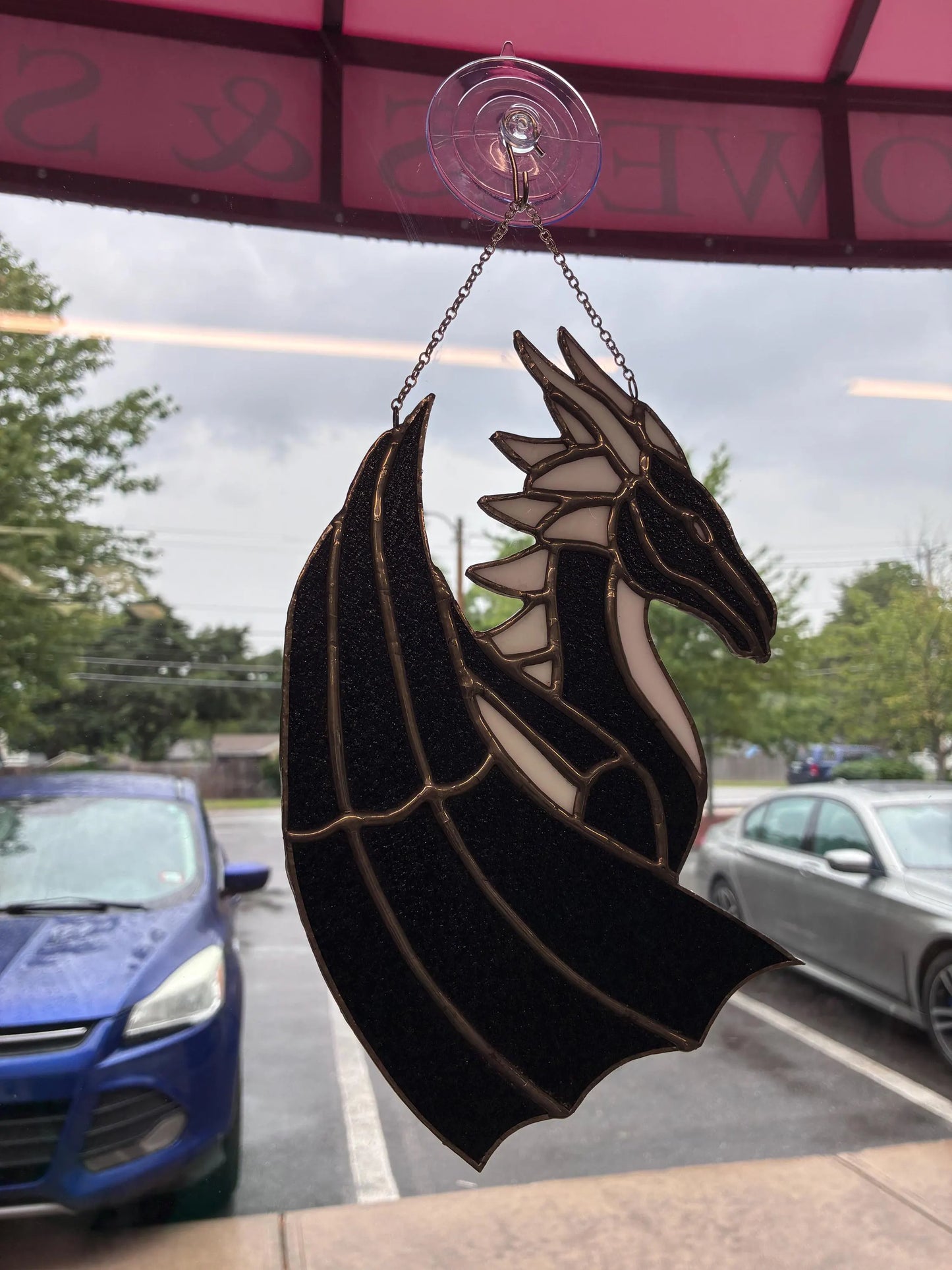

Black Dragon Stained Glass
Black Dragon Stained Glass
SKU: HM-120S
Regular price
$137.99
Regular price
$137.99
Sale price
$137.99
Quantity

Secure checkout

Pickup Available

Pickup Available
Shirley's Flowers & Sweets
138 Concord St, Nashua,
NH
03060

Delivery Information

Delivery Information
Same Day Delivery is available in select areas, and as allowed by zip code and the delivery date selection calendar.

Substitution Policy

Substitution Policy
To guarantee the freshest bouquet possible, we may replace some stems in your arrangement for color or flower variety. While we always do the best to match the picture shown, sometimes different vases may be used. Any substitution made will be similar to the original design and be of equal or greater value.
Floral and Plant Substitutions
For bouquets and plants of one variety, such as roses or orchids, we focus on matching the floral type but may substitute for different colors.
This stained glass piece features a striking dragon, rendered in black and mother od pearl white glass with foil outlining. The black glass, textured to suggest scales or dark energy, forms the main body, wings, and head of the dragon. Contrasting pearl white glass pieces represent the crest or horns along its head and neck, as well as sections of its wings, creating a sense of depth and dimension. The foil, meticulously applied, outlines each individual piece of glass, giving the dragon a defined and almost skeletal appearance. The dragon is depicted mid-flight or perhaps just unfurling its wings, with one wing prominently displayed in the foreground, partially obscuring the view beyond. The overall impression is one of power and mystique. The choice of black and white, while stark, offers a timeless and classic aesthetic. The textured black glass adds an element of subtle complexity, preventing the piece from appearing flat. The sharp, angular lines of the dragon's head, crest, and wingtips convey a sense of fierce beauty and untamed spirit. The emotional expression of the dragon is one of regal strength and an almost watchful intensity. Its gaze, implied by the shape of its head and the dark glass, seems to pierce through the scene. The piece evokes a sense of wonder and fantasy, drawing the viewer into the mythical realm of dragons. The story or moral behind a dragon artwork can vary widely. This particular rendition, with its dark, powerful form and sharp edges, might symbolize primal strength, protection, or even a guarded wisdom. Dragons are often seen as guardians of treasures, both literal and metaphorical, or as symbols of transformation and overcoming challenges. The stark contrast of black and white could also represent the duality of nature, the balance of forces, or the journey from darkness into light. The diffused light creates a somewhat moody atmosphere, which complements the dramatic nature of the dragon. The raindrops on the window frame suggest a recent rain, adding a layer of subtle narrative to the scene, perhaps hinting at the dragon's elemental connection to storms or its ability to endure and emerge from adversity.